
Building Stronger Community
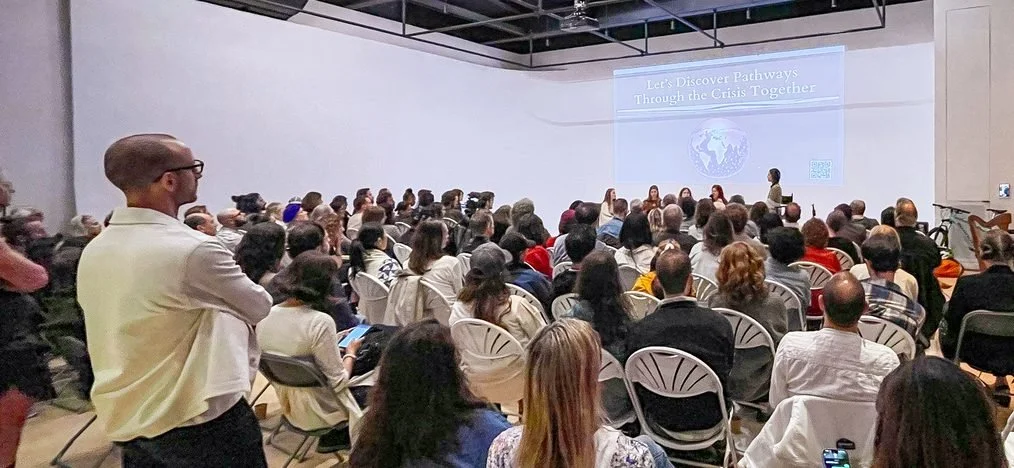
PSYCA’s Climate, Consciousness & Mental Health Summit, Sept, 2025, CREDIT: Tripp Berini
Dear friends and colleagues,
At PSYCA, our intersectional community brings together people who explore consciousness and feel a deep call to protect our natural world, alongside climate professionals seeking resilience, connection, and support in a political landscape that is more challenging than ever.
As we move toward the New Year, we’re listening deeply to understand what it means to grow stronger together. Make new connections and share your insights:
What programming would make the greatest contribution at this moment?
How can our collective imagination help us dream a path forward?
How can we support one another in the ways our community needs most?
You’re invited to join our PSYCA Town Hall & Global Connector (online) on December 18th at 12pm ET. This gathering is a space to share ideas, offer feedback, and help shape the direction of our programs in 2026 and beyond.
We welcome your perspective and would value your participation.
In the meantime, enjoy news from the PSYCA Community…
From the MAPS Bulletin article, Dr. Michael Makhinson explores how reconnecting with the natural world may be essential to both human and planetary healing—and how psychedelic experiences can help catalyze that reconnection.
Drawing from forest bathing practices, Indigenous ecological wisdom, and emerging fields like Ecological Medicine, Makhinson traces how Western culture’s separation from nature has contributed to declining well-being and environmental harm.
He highlights growing global movements—from biophilic design to nature-based healthcare—and points to new research suggesting that psychedelics can rapidly increase feelings of nature connectedness, awe, and stewardship.
Ultimately, Makhinson invites readers to consider psychedelics not only as therapeutic tools, but as potential facilitators of a much deeper shift: remembering ourselves as part of, rather than apart from, the living world.
How to heal in NYC? Big question. Anne Philippi, Host, The New Health Club, Asks Dr. Casey Paleos
Philippi notes, “There is an irony to seeking mental peace in New York City, a place that runs on cortisol, caffeine, and ambition. Yet, quietly tucked away in the heart of the city, a new infrastructure for healing is being built—one that goes far beyond the traditional “couch and prescription pad” model.”
She sat down with Casey Paleos, MD, a pioneer in the psychedelic space and the Co-Founder of InnerMost. With over 15 years of experience—including acting as Principal Investigator for MAPS-sponsored MDMA trials—Dr. Paleos is helping map the future of urban mental health.
The Crisis of Connectedness Dr. Paleos argues that we aren’t just suffering from chemical imbalances; we are suffering from a “crisis of connectedness.” In a city of 8 million people, isolation is rampant.
“Psychedelics can be viewed as tools for map provision,” Dr. Paleos said. They don’t just numb symptoms; they help patients redraw the map of their own psyche, finding routes back to themselves and their community.
Read the full Substack or listen on Spotify or Apple.

DJ Spooky participates in the Venice Biennial for Architecture 2025 with Terreform One architects with his composition Earth Ocean in collaboration with Terreform Architects
Every forest is a symphony. Polyphony. Polyrhythm. Ultra dense canopies of sound. The acoustic call and response of every species in the ecosystem creates a complex acoustic architecture that fosters a dense and hyper layered phenomena that follows the totality of the way we think of any forest. The complex sound systems that animate forests are an incredibly rich tapestry. But what happens when we look at the way sound and plants act underwater? What happens when we look at the interplay of biophonic architecture as a kind of pattern recognition based on acoustic phenomena?
One of the most important parts of the global underwater architecture of plants is kelp, a kind of macroalgae. Kelp forests cover a third of the world’s coastlines and are a powerful component of the oceans’ ecosystems.
Kelp forests are often called “rainforests of the ocean” because they are a reflection of complex underwater ecosystems that provide food and shelter for many species. Learn more at Djspooky.com.

Wildflower Studios, New York’s only high-performance TV and film production facility, purpose-built for the unique needs of 21st-century storytelling and sustainability
I was grateful to visit Wildflower Studios this week, developed by lifelong New Yorker and film industry veteran Robert De Niro and real-estate visionary Adam Gordon (PSYCA Member), Raphael De Niro, and designed by the groundbreaking architectural firm Bjarke Ingels Group (BIG).
Their vision is a comprehensive 21st-century tool for storytellers—a village of collaboration, creativity, efficiency, and innovation—finally in New York City, and with values-aligned design.
“From day one, we designed this studio as much around climate and community resilience as around production workflow,” said Gordon. “We lifted the entire complex a floor so a Sandy-style flood could wash through the garage instead of the stages, tucked about four and a half acres of parking under the building to take cars off neighborhood streets, and created an all-electric facility with roughly 150,000 square feet of solar on the roof, robust recycling, and a full air exchange every hour for healthy indoor air. Even the finishes are intentional—exposed concrete and metal that minimize off-gassing—because sustainability can’t just be a buzzword; it has to be embedded in every detail of how people work and feel here.”
Field Trip? Stay tuned!
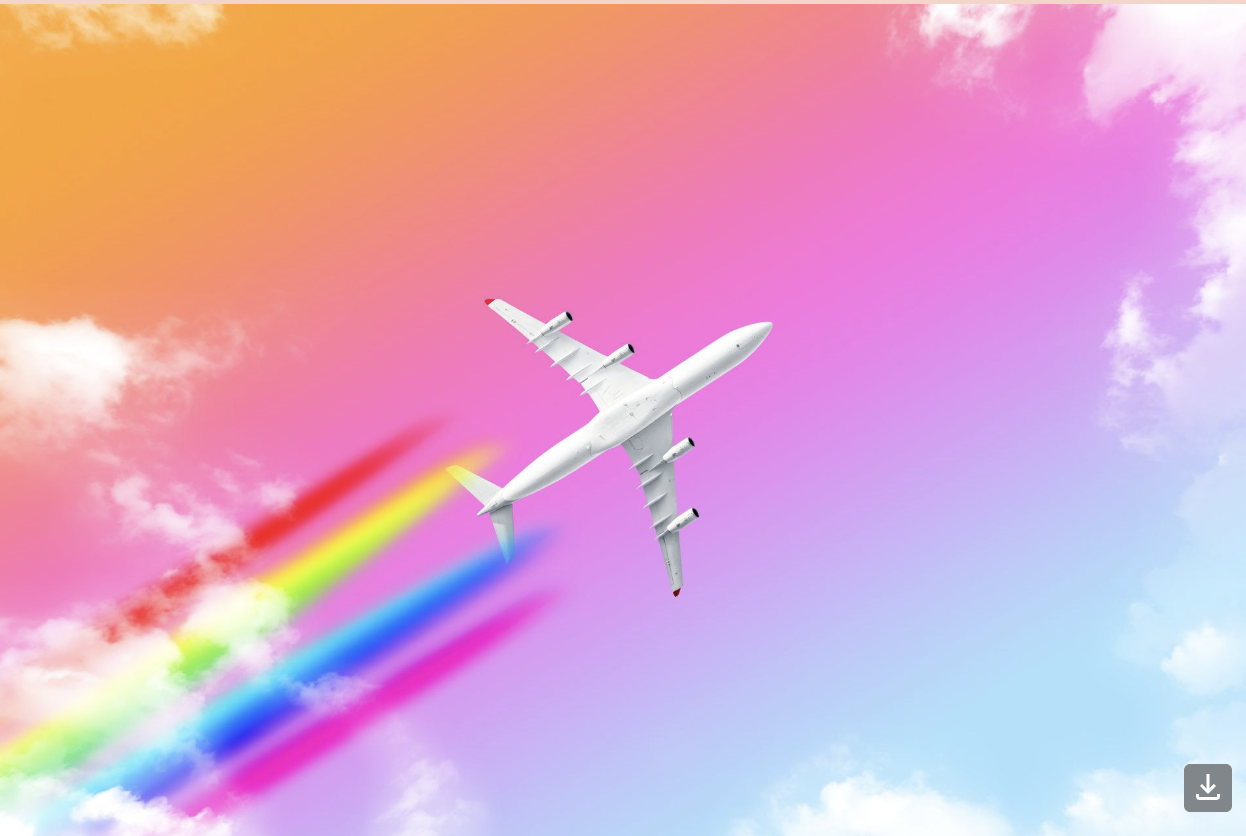
CREDIT: DoubleBlind
What’s the Real Cost of Flying for Psychedelic Healing?
PSYCA Mycelium Thought Leadership Member Leonie Staas is published in DoubleBlind! She begins her piece with this introduction:
Everyone wants psychedelic healing, and people are willing to go far for it — quite literally. If a retreat they want to partake in or a community they trust and want to journey with is located on the other side of the planet, then so be it. Distance becomes part of the process, even if it means burning a little jet fuel to get there. Some good is simply worth the bad, right?
The plant medicine community appears to be deeply concerned about our Earth. In psychedelic circles, many even see these plants and compounds as tools to change our ways and inspire deep shifts towards ecological awareness. Yet, the spirit of environmentalism rarely seems to translate into our very own choices. The attempt to seek psychedelic healing, for most people, justifies flying across countries — even continents — often multiple times a year. Meanwhile, the climate catastrophe is in full swing.
So why is no one talking about this?
Thank you for reading! As always your participation and enagement is welcome. I look forward to seeing you at PSYCA’s Online Global Town Hall (RSVP) before the holiday.
Gratefully,
Marissa